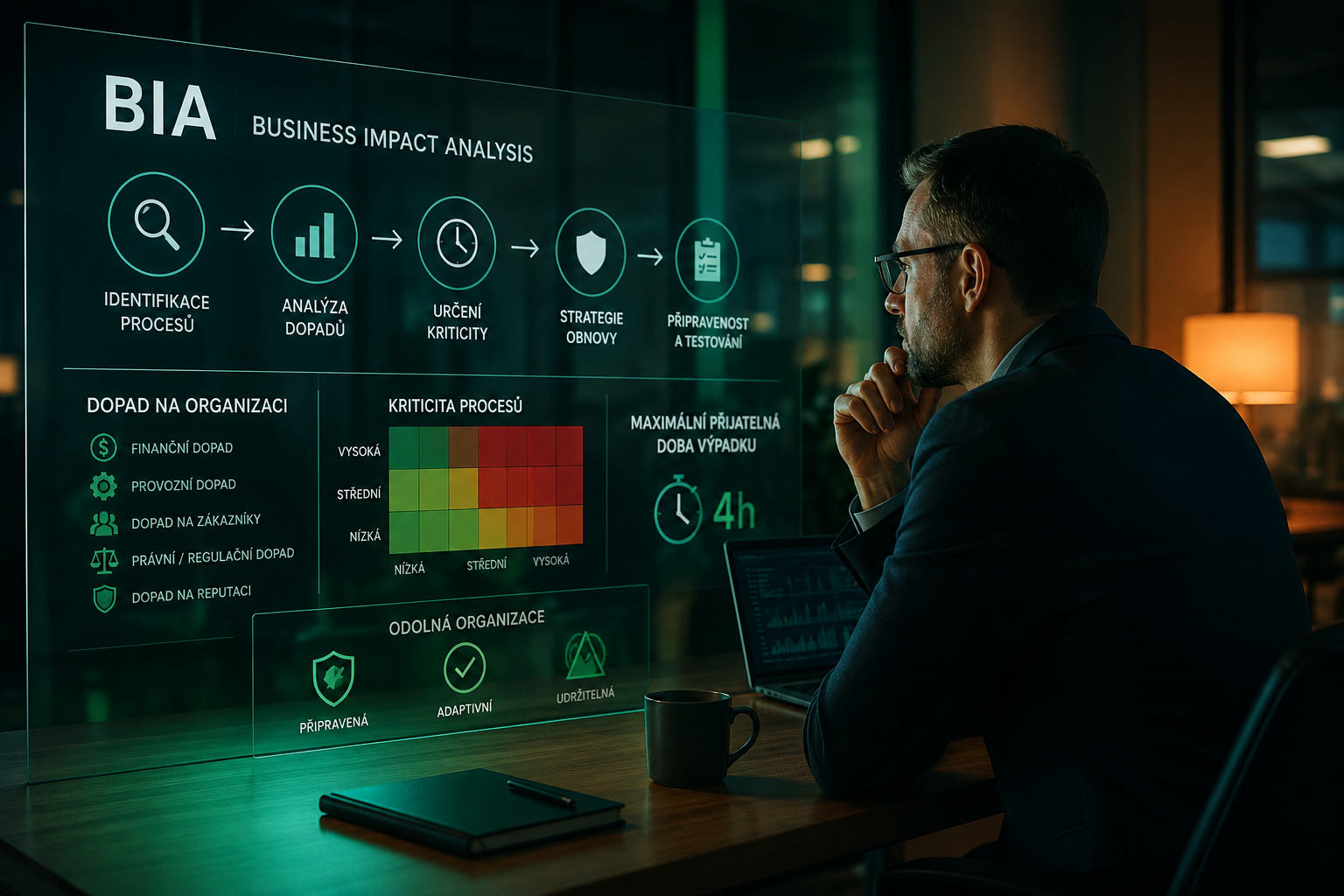
You have data, but can you really make use of it?
Why is it not enough to simply collect information, and how can it be linked together to support management decision-making?
.jpg)
Data is information. What matters, however, is how it is processed and how connections are identified.
Let’s imagine a common scenario. The IT department is seeing an increased number of incidents, the security team is flagging newly identified risks, and operations staff are dealing with outages of certain services. Each of these teams is working with the correct information, but each sees only its own perspective on the situation. Management then receives several different reports that they must piece together on their own. The result is a lengthy evaluation process, uncertainty, and often decisions based on incomplete or inconsistent information.
This is precisely where the difference lies between an organization that merely collects data and one that actually works with it. It’s not enough to know that a security incident has occurred or that a server is experiencing high load. It is important to understand the impact of individual events on the organization’s operations, which processes they may jeopardize, what risks they pose, and who is responsible for resolving them. It is equally important to have an overview of how quickly the situation was resolved—how long the service was unavailable, when a response was initiated, how long the resolution took, and whether the agreed-upon SLA parameters were met. This information allows not only for effective operational management but also for an objective evaluation of the quality of services provided and the performance of individual vendors.
Data integration leads to better management decision-making
Context is what transforms data into useful information. High server load can be a normal operational situation, but it can also be the first sign of a serious problem. If the server in question is part of a critical service, a security incident is occurring on it at the same time, and a planned outage of other related infrastructure is scheduled, this information takes on a completely different significance. Furthermore, in practice, organizations do not rely on a single technology or system. Their IT environments consist of a range of different technologies, applications, and devices, each of which generates its own data, logs, and operational information. Therefore, true value comes only from interconnecting these elements and the ability to put this data into context. Only by linking data across the entire technological environment can we correctly set priorities, assess impacts, and decide which measures are most important.
That is precisely why management today does not need more dashboards or more spreadsheets. Above all, they need relevant information to make quick and sound decisions. Which risk poses the greatest threat to the organization’s operations? Which services might be at risk? What will be the impact if the problem isn’t addressed? And who is responsible for resolving it? The answers to these questions cannot be obtained from a single system or a single report. They emerge only by linking data across the entire organization.
How to Integrate Data into a Single Functional Unit
The modern approach is not based on replacing existing systems, but on integrating them and centralizing data into a single, clear overview. Information about assets, their interrelationships, risks, incidents, tasks, and corrective actions forms a unified whole that provides not only specialized teams but, above all, management with a comprehensive view of the organization’s actual state. Instead of isolated data, an environment is created in which it is possible to track connections, evaluate the impacts of individual decisions, and effectively set priorities.
Effective decision-making relies on high-quality data management across the entire organization. Data is often generated in different systems and has varying structures; without consolidating it, it is impossible to gain a comprehensive view of operations or security. This is precisely where the Open Data Platform (ODP) comes into play, ensuring the collection, reading, cleaning, transformation, and integration of data from various technologies into a unified database. The OMIS system then builds on this prepared and consolidated data, using it to track assets and their interrelationships, assess risks, and manage security incidents, tasks, and audit outputs. As a result, management gains reliable, contextual information and can make rapid, data-driven strategic and operational decisions.
The future belongs to organizations that know how to work with data
Furthermore, in the future, the greatest competitive advantage will not be the ability to collect data. Instead, it will be the ability to interpret data correctly, identify connections within it, and use it to manage the organization. Companies that can link information from different areas of their operations will respond more quickly to changes, manage risks better, and plan for future growth more effectively. Not because they have more data than others, but because they understand its significance.
Data is only valuable when it helps with decision-making
Data is one of the most valuable assets of any organization today. However, its true value does not arise the moment you store it in a database. It arises only when you are able to turn it into insights that support high-quality decision-making, effective process management, and the company’s long-term growth. Organizations that actively work with data are better able to assess risks, respond more quickly to changes, and more effectively manage security incidents, system outages, and other operational complications. As a result, they are more resilient, better prepared for unexpected situations, and ensure business continuity. It is precisely the ability to use data correctly, respond quickly, and keep the organization functioning even in crisis situations that represents one of the greatest competitive advantages today. This is the fundamental difference between an organization that merely records data and one that creates real value for its business from it.