
From assets and risks to tasks, incidents, and audits
OMIS creates a map of assets and dependencies and links it to risk assessment, incident management, tasks, and the audit trail so that it is always clear what the priority is and what the next step should be.
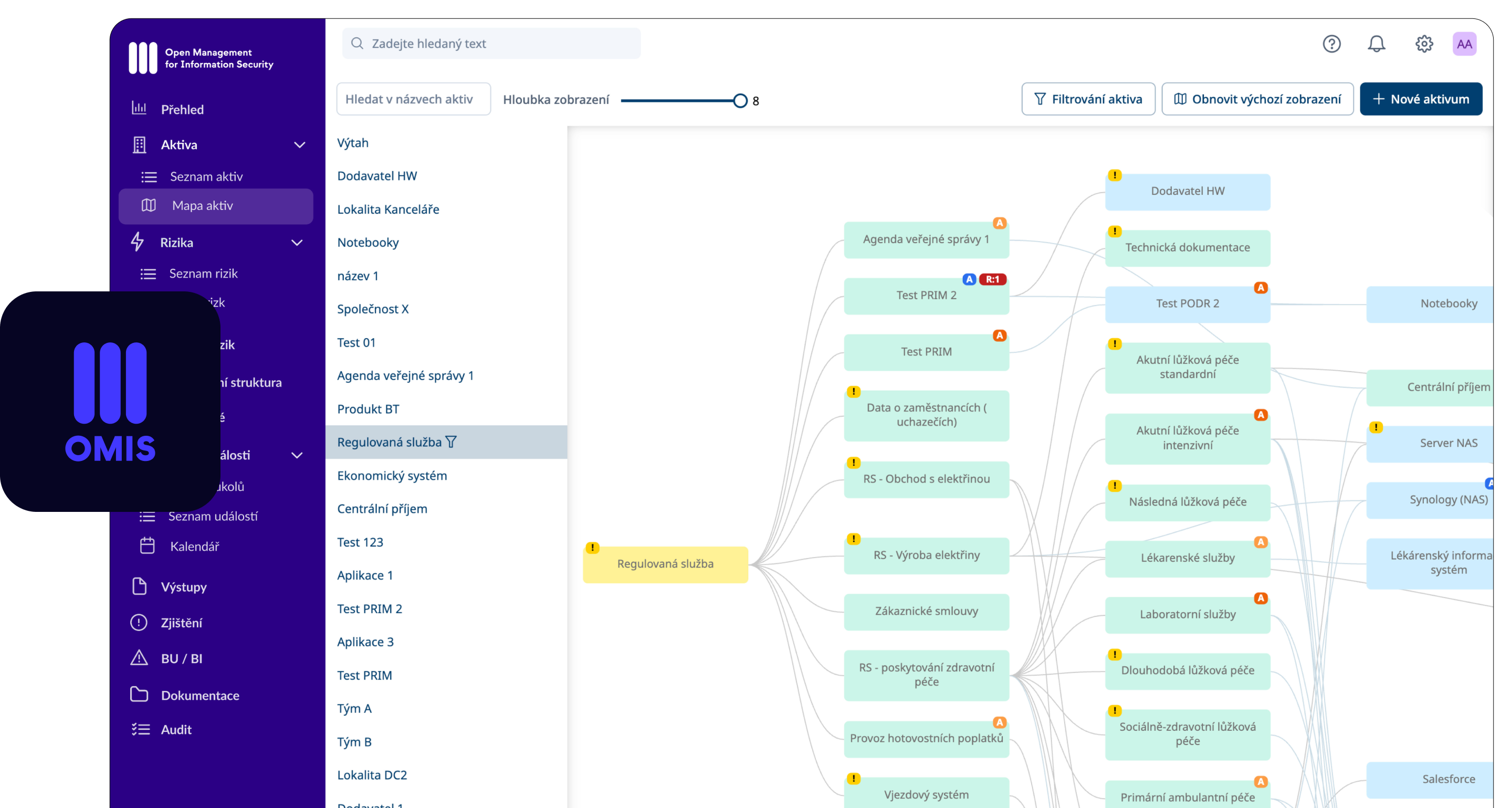
An overview of functions that put findings into practice
OMIS brings together assets, their dependencies, risks, measures, and audit outputs into a single framework, enabling decisions to be made based on the actual impact.
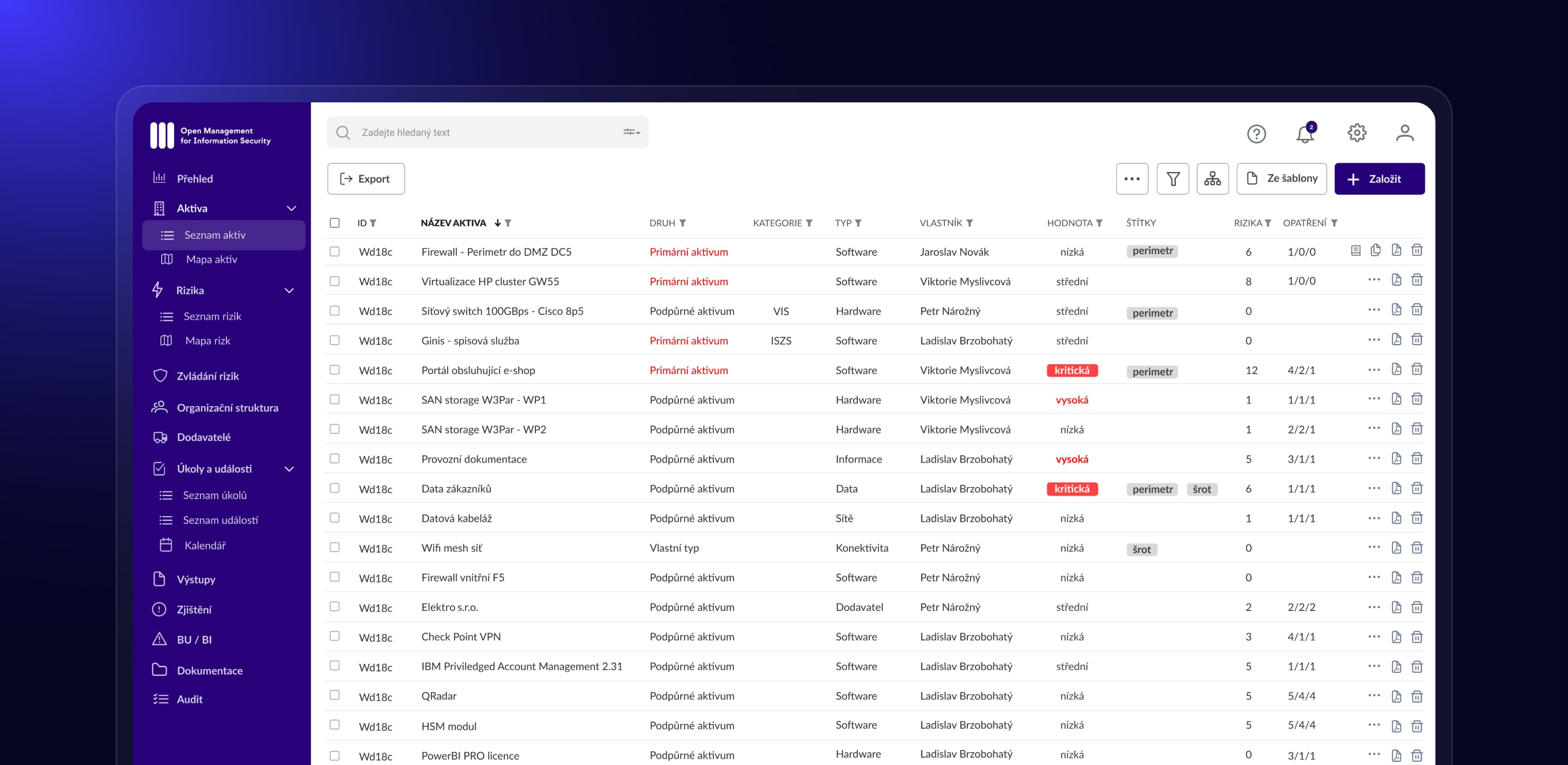
C/I/A Asset Assessment
You will assess the criticality of assets based on confidentiality, integrity, and availability, and establish consistent priorities.
Business Continuity (RTO/RPO)
You can configure recovery requirements and the impact of outages to plan for realistic resilience.
Visual Map of Assets
You can immediately see dependencies and impacts across systems and services.
Filtering the relationship tree
You will see only the relevant dependencies for a specific asset or service.
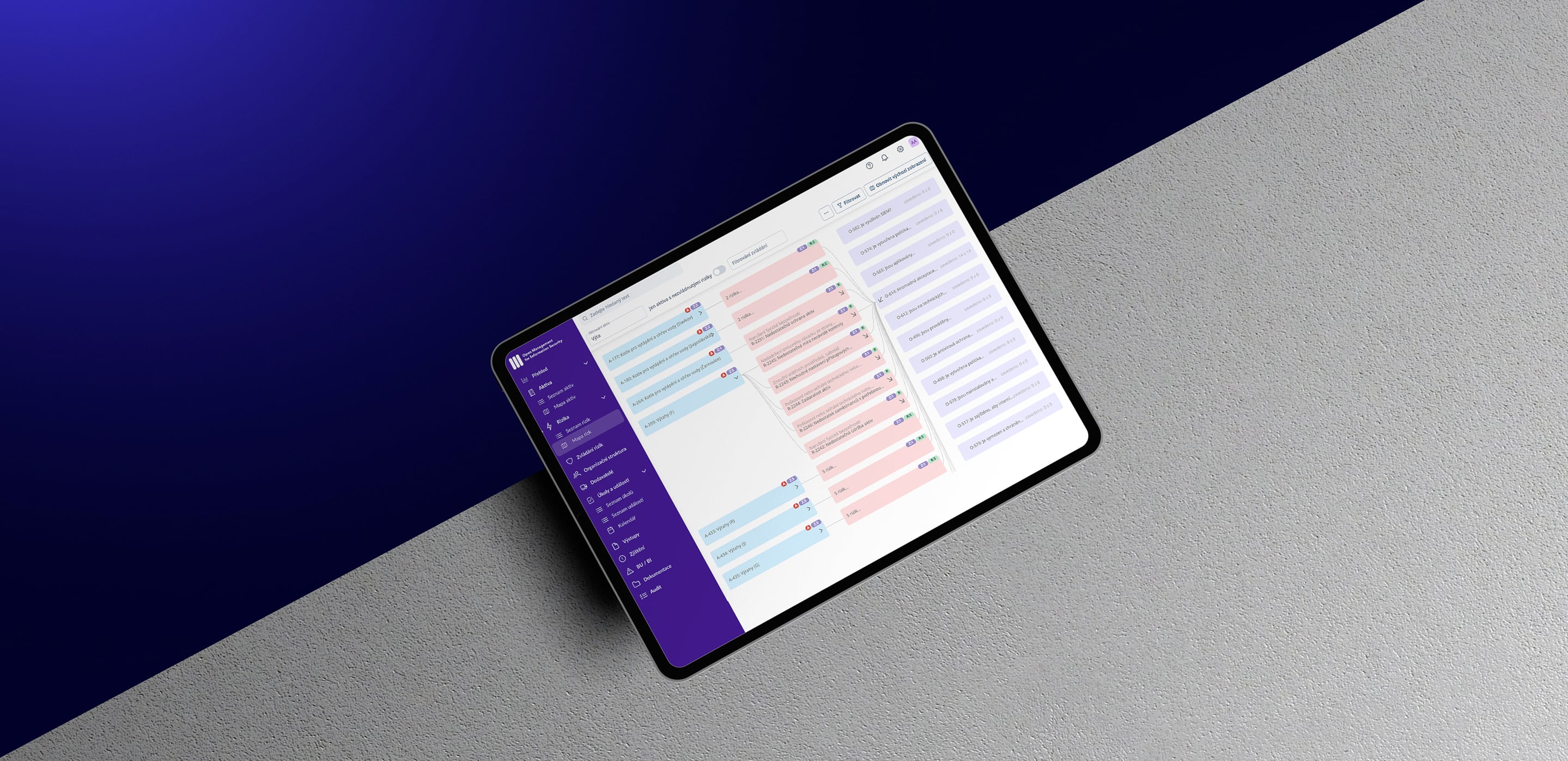
Bulk Risk Registration and Acceptance
You can set up risk parameters quickly and consistently, even for a large number of assets.
Risk Assessment (Automatic Calculation)
The system automatically calculates the risk based on the selected methodology and asset data.
Risk Mitigation
You plan and document risk mitigation measures, risk acceptance, and other approaches to managing risks in practice.
Security events and incidents
Recording and management of events/incidents linked to specific assets and their impacts.
Notifications and Escalations
Reminders about gaps in the records and upcoming deadlines, so nothing falls through the cracks.
Tasks across records
Tasks with assigned responsibilities and deadlines linked to risks, incidents, and corrective actions.
Audit trail and history
Traceable changes and "who–when–what–why" decisions for monitoring and auditing.
Reporting and Exports
Reports and outputs for various roles—from operations to management.
From a regulated service to managed fulfillment
A practical approach to turning regulatory requirements into managed compliance rather than mere record-keeping
Identification of a regulated service
We will determine which service or process falls under the regulation and who is responsible for it and owns it. This establishes a clear foundation for further work, responsibilities, and subsequent impact assessments.
Asset and Liability Model
We will identify primary and supporting assets and map their relationships so that their impact and dependencies are clear. This makes it obvious which elements are critical to the service and where an outage or disruption would have the greatest impact.
Risk Identification and Assessment
We generate risks from catalogs (threats–vulnerabilities–scenarios), assess them, and establish acceptance levels. The assessment is based on the actual significance of the assets and allows us to distinguish formal risks from those that truly require a solution.
Proposed Measures and Mitigation Plan
We will propose measures, define their effectiveness, costs, timelines, and target residual risk, and develop a risk management plan. The result is not just a list of measures, but a concrete roadmap outlining what to do, in what order, and with what expected benefits.
Performance Monitoring and Verifiability
We break the plan down into tasks, assign responsibilities, set up notifications and escalations, and continuously generate outputs and an audit trail for regulatory compliance and oversight. This way, the organization doesn’t just deal with a proposal on paper, but with actual implementation that can be documented at any time.
OMIS from a role-based perspective
Different perspectives, one shared state
OMIS gives each role a different level of control over security
For the Cybersecurity Manager
OMIS helps manage security across assets, risks, and their interrelationships as a single integrated system. The map highlights dependencies, impacts, and gaps where assessments or measures are missing. Threat and scenario catalogs streamline risk creation and ensure a consistent approach across the organization. Tasks, incidents, and findings are linked to specific risks and evidence.

For the IT Manager
OMIS provides technical and operational context for incidents. It shows which assets and services are affected, what is critical, and what the impact on operations is. Through integrations with surrounding tools, it transforms events into a managed solution with a history, assigned responsibilities, and deadlines. This speeds up both diagnosis and resolution.
For management
OMIS provides management with an overview of risks, measures, and their actual timeline. It enables decision-making based on the impact on the organization and allows for better evaluation of the benefits of individual steps. The status is verifiable, auditable, and assigned to specific responsibilities.
OMIS
AI Module
AI that identifies priorities based on assets and incidents and recommends actions
AI and Internal Connections
The AI in OMIS processes data on assets, relationships, risks, threats, and countermeasures, and supplements this information with signals from incidents and events. As a result, it provides a clearer picture of where real risks arise and what issues should be prioritized.
Recommendations that lead to action
AI suggests priorities and appropriate measures based on impacts, catalogs, and the current situation. The outputs are translated into tasks, deadlines, and a traceable history of changes.
Checking for gaps and inconsistencies
The module flags unassessed assets, missing links, and risks without proposed mitigation measures. It thus helps keep the system consistent and usable for further management.
Cybersecurity as a Service – From Risks to Audits
We’ll help you manage risks and incidents in a way that protects your business and stands up to scrutiny.

Risk Analysis and Mapping of Critical Services
We will identify critical/regulated services, determine primary and supporting assets, map dependencies, and establish a risk assessment, including remediation priorities.
Business Continuity and Operational Readiness (RTO/RPO, Tests, Corrective Actions)
We help define and maintain service continuity, monitor the timely implementation of measures, and recommend steps that effectively enhance resilience.
An ISMS that speaks the language of financial regulators
Broker Trust has implemented an information security management system that includes an asset inventory, risk management, and documentation to meet DORA and GDPR requirements.








When was the last time you contacted a professional?
Let us know what you need help with—fragmented systems, infrastructure integration, cybersecurity, monitoring, or AI implementation. Together, we’ll determine whether and how it makes sense for us to get involved—from a one-time consultation to a long-term partnership.