
Evidence-Based IT Management
ODP collects, correlates, and analyzes operational data from infrastructure, applications, and support systems to help identify the root causes of issues more quickly and manage IT based on real-time conditions.
.png)
Functions for data collection, analysis, and traffic evaluation
ODP covers the entire process, from data ingestion and cleansing through data correlation and storage to online monitoring, anomaly detection, and historical reporting.
Collection of operational data
Collection of logs, metrics, events, and other data from infrastructure, applications, and support systems.
Data Preparation and Consolidation
Data cleansing, quality control, and consolidation prior to further processing.
Putting data into context
Correlation of technical signals, which helps identify the cause and impact of a problem more quickly.
Data Warehouse and History
Data storage for long-term analysis, auditing, and tracking trends over time.
Analytical Insights for IT
Pre-built reports for SLA, KPIs, capacity, availability, and other operational metrics.
Integration with data sources
Integration with monitoring, SIEM, log management, service desk, CMDB, and other systems.
Anomaly and Signal Detection
Evaluation of outages, anomalies, and operational findings by impact and priority.
Online traffic monitoring
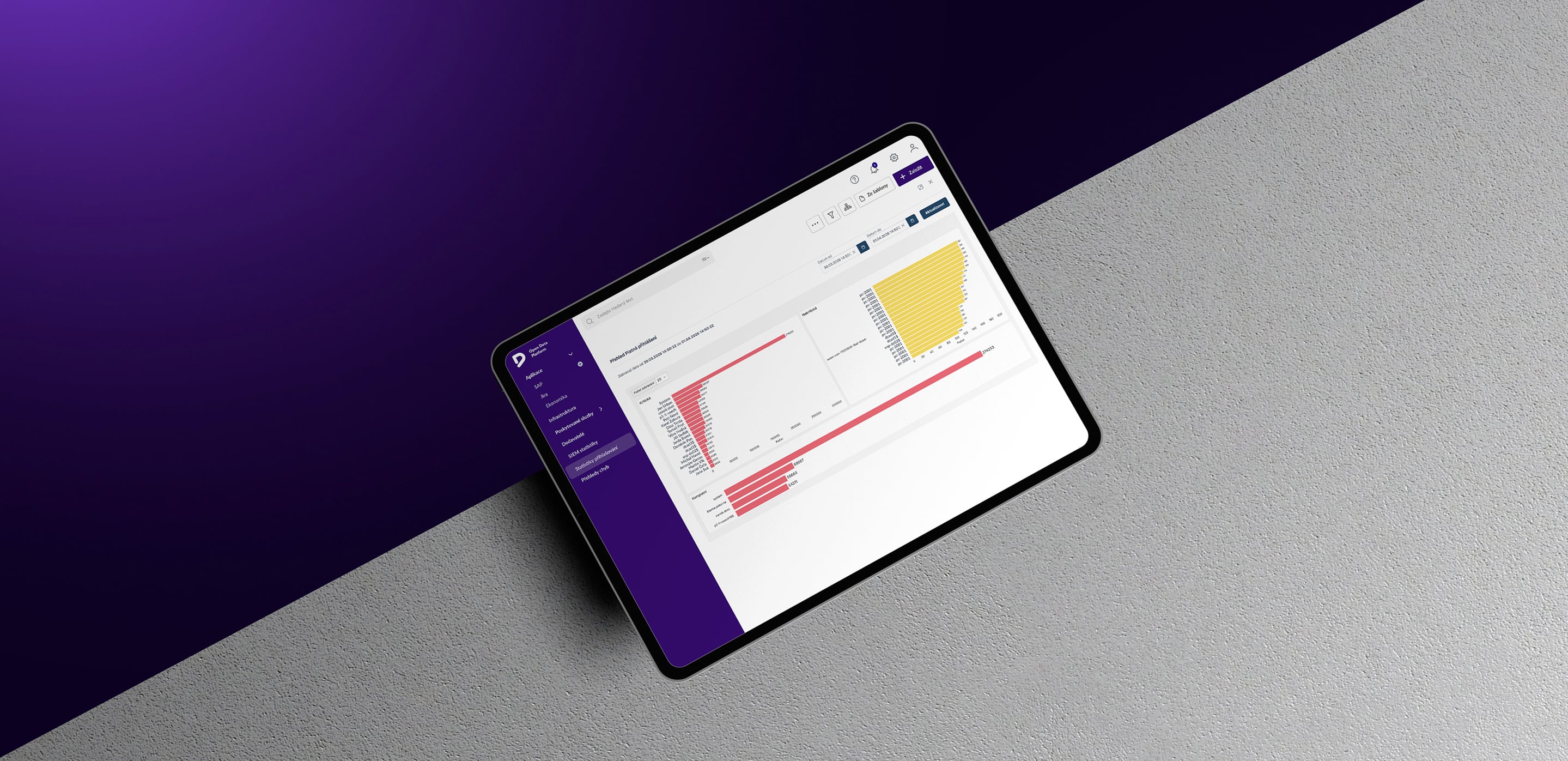
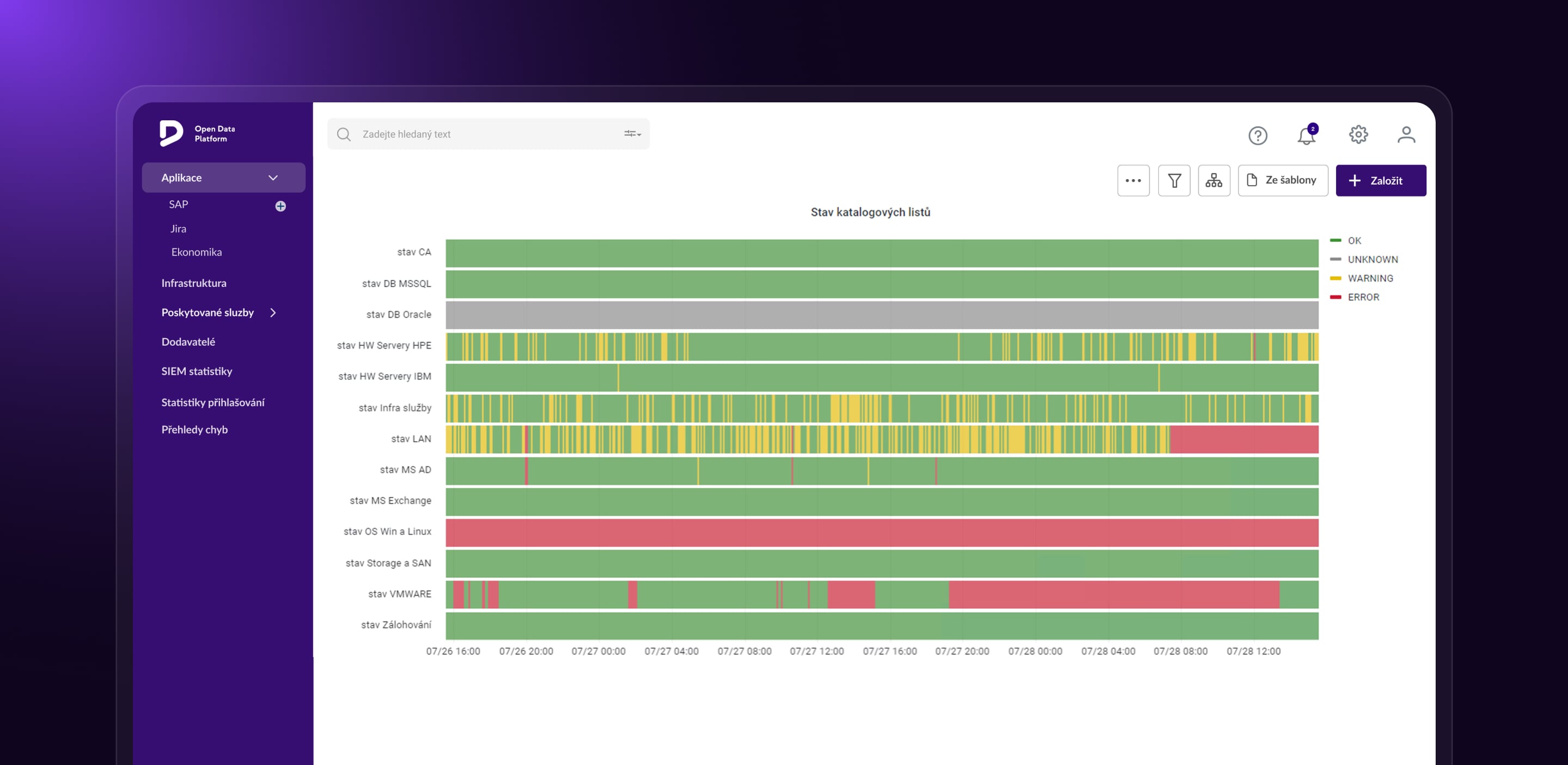
An up-to-date overview of the status of services and infrastructure, with the option to view detailed information.
Reporting on Operational History
Overviews of trends, impacts, and SLA compliance for both IT operations and management.
From Data to Diagnostics and Traffic Management
ODP integrates the collection of operational data, its analysis, and service monitoring into a single, seamless process.
Connecting data sources and selecting key data
We’ll integrate monitoring, log management, SIEM, firewalls, CMDB, service desk, and other sources, and together we’ll determine which data and signals provide real value for operations.
Data Consolidation and Preparation
The data undergoes ingestion, quality control, and normalization before being stored in a shared data layer, making it ready for online analysis and historical data processing.
Linking the connections between services and infrastructure
We establish connections between applications, infrastructure, events, and operational signals so that every finding has a clear context, impact, and traceable origin.
Online evaluation and rapid diagnosis
ODP monitors deviations, incident alerts, and SLA compliance in real time and allows users to drill down to the specific source of the problem.
Operations Dashboard and Management Reporting
We will provide technical teams with online operational monitoring and supply management with reports on history, trends, impacts, SLAs, capacity, and delivery quality.
ODP from a role perspective
A Different Perspective, a Single View of Operations
ODP provides technicians, IT staff, and management with a unified view of service and operational status.
IT Technician
ODP consolidates logs, metrics, and events across tools into a single context, thereby reducing the time needed for diagnostics and root cause analysis. It enables users to drill down from a service to a specific component, filters out noise, and converts findings directly into an incident or task with priority, impact, and responsibility.

IT Director
ODP provides a unified overview of service health and actual delivery quality across technologies and vendors. You’ll gain measurable SLAs/KPIs, trends, and insights for capacity planning and investment decisions, including the ability to compare “vendor reports” with actual operational data. Findings and corrective actions are traceable, enabling systematic management of operations and continuous improvement.
Management
SLA translates technical operations into understandable outcomes: availability of key services, frequency and duration of outages, trends, and risks. It helps improve decision-making regarding investments and priorities, reduces incident resolution times, and increases transparency for both internal customers and external suppliers through standardized, consistent reports.
ODP
nd AI Module
AI that shortens the path from signal to solution.
A quick summary of the situation
The AI in ODP analyzes logs, metrics, events, and tickets to quickly summarize what’s happening in production. This helps reduce the time between when a problem arises and when it is understood.
Recommendations for Next Steps
The AI suggests appropriate actions, such as verification, restart, escalation, or modification, and always links them to the specific data and records on which they are based.
Proposed probable cause
Based on operational data, context, and previous incidents, it suggests a likely cause of the problem. This allows the technician to do more than just address individual alerts; it provides an initial, clear picture of the situation.
Services for ODP Deployment, Monitoring, and Development
In addition to the platform itself, we also provide data integration, operational support, and further development of data and reporting features.

Connecting Data Sources
Integration of monitoring, SIEM, logs, service desk, databases, and other systems.
Proactive operational monitoring
Monitoring, event correlation, escalation, and ongoing platform management.
Dashboards and Analytics Development
Expanded metrics, reports, and dashboards for both operations and management.
Transparent ICT for the Entire Capital City
The Prague City Hall has gained a centralized overview of the status of key systems and applications, providing information for operators, IT management, and city leadership.






When was the last time you contacted a professional?
Let us know what you need help with—fragmented systems, infrastructure integration, cybersecurity, monitoring, or AI implementation. Together, we’ll determine whether and how it makes sense for us to get involved—from a one-time consultation to a long-term partnership.