
A single platform for security management across organizations
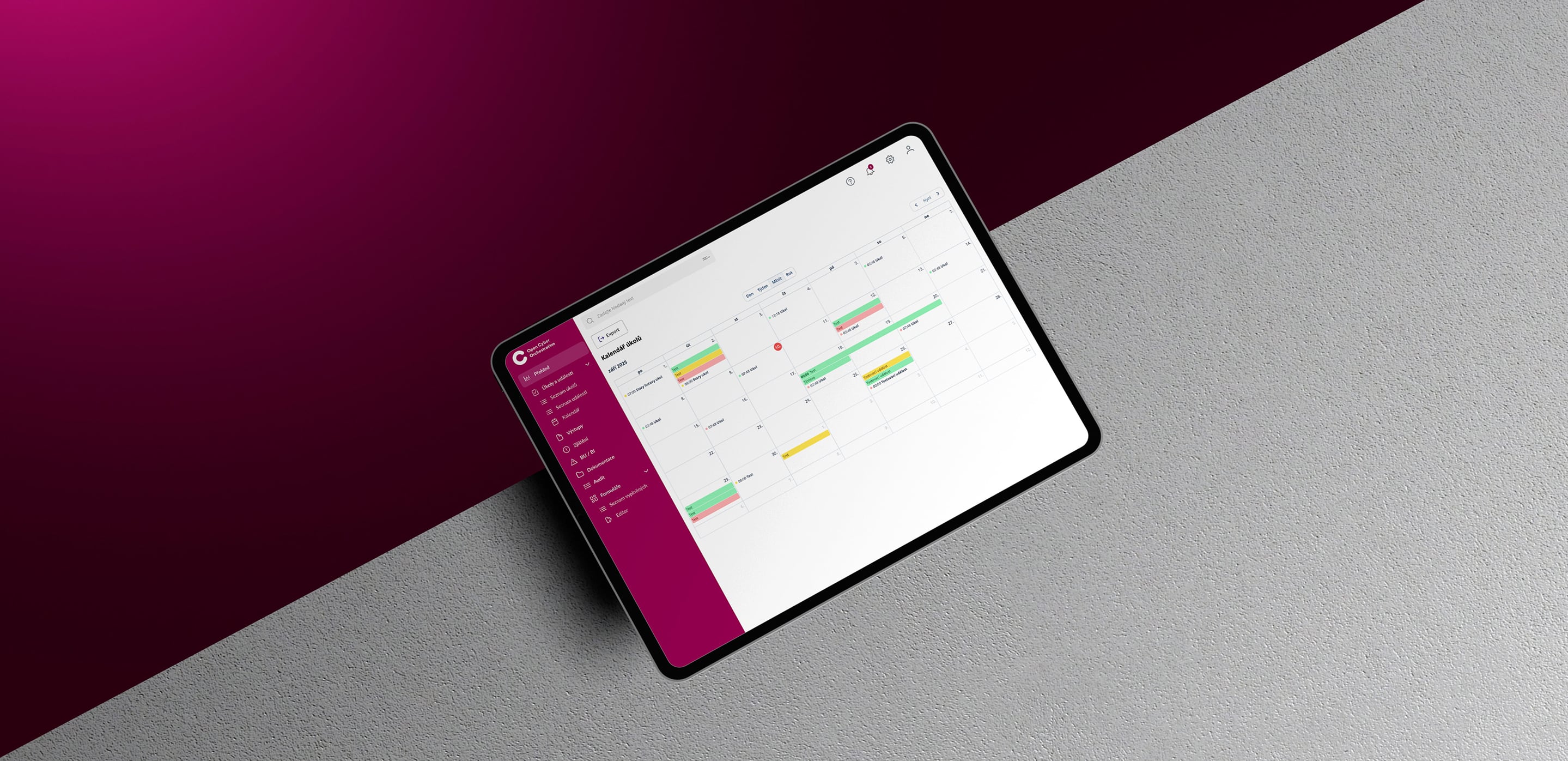
OCO integrates individual OMIS instances into a centralized system for managing tasks, incidents, responsibilities, and communication, enabling the coordination of workflows, tracking of deadlines, and a comprehensive overview of the status across the entire group.
.png)
Functions for central coordination and oversight of implementation
OCO consolidates requests from multiple organizations into a unified system for managing tasks, deadlines, evidence, incidents, and reports, enabling users to track status and accountability in one place.
Central Catalog of Responsibilities
Record of obligations under the ZoKB/VoKB/NIS2/ISO 27001, with mapping to areas and control points.
Supporting documents for communication with the regulator
Prepared exports and evidence packages for reports/procedures involving NÚKIB.
SLA and Escalation Rules
Automatic deadline tracking and escalation in the event of an impending non-compliance.
Centralized task management across tenants
Tracking the status, priority, and completion of tasks, including filtering and reporting.
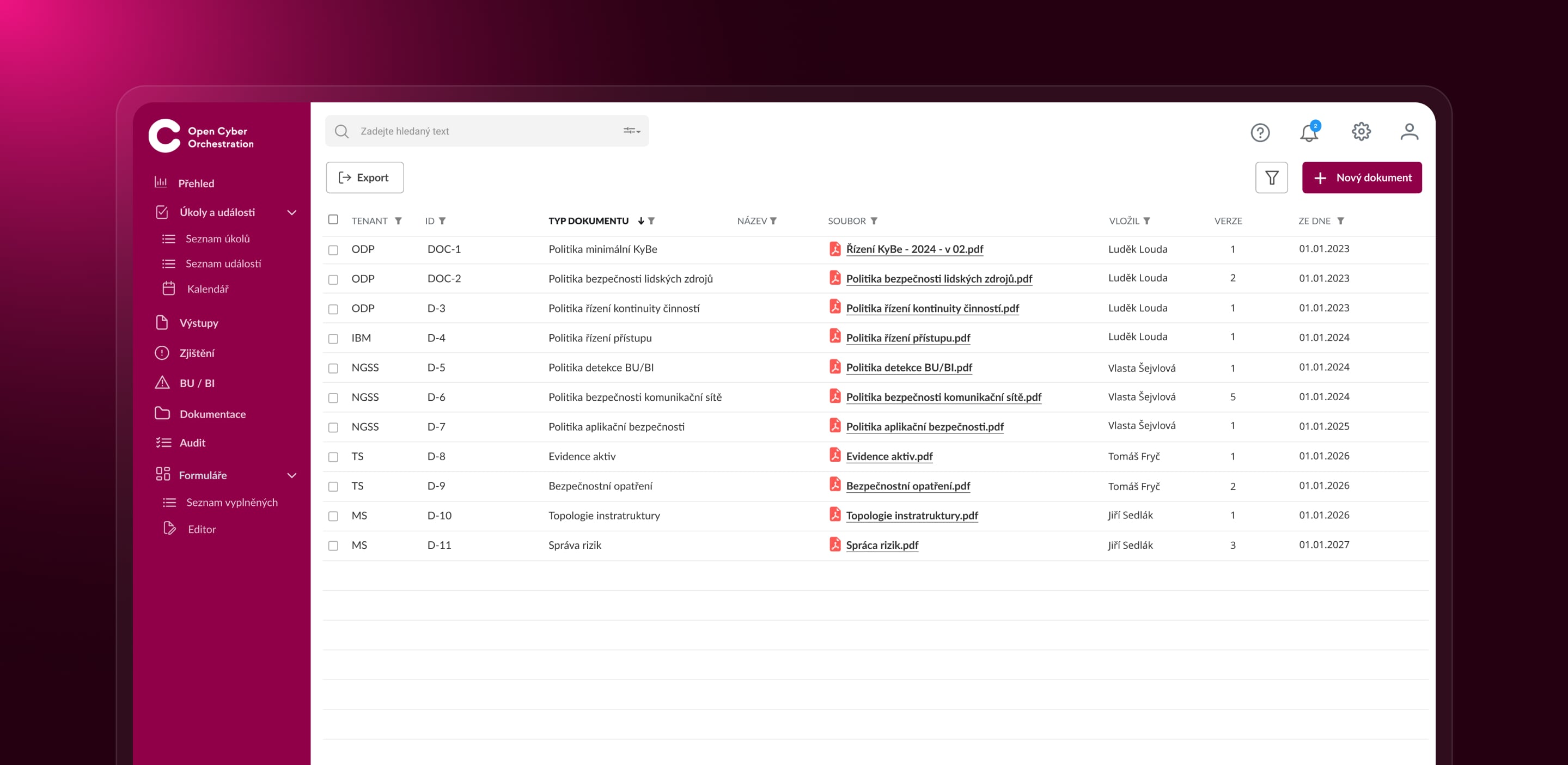
Records of Documentation and Inspections
Versioning, revisions, approvals, and cross-references in documentation regarding responsibilities.
Audit trail
Traceability of "who–when–what–why" for tasks, evidence, changes, and communication.
Roll-up reports for management
Aggregated reports on performance status, risk areas, and trends over time.
Integration with local OMIS systems
Two-way synchronization of tasks, measures, incidents, and document outputs across tenants.
SSO and Unified RBAC
Single sign-on and role/permission inheritance across organizations.
How OCO Works in Practice
It breaks down responsibilities into manageable steps, deliverables, and a continuously assessed status of progress.
Defining the Scope and Responsibilities
At the outset, the participating organizations, roles, responsibilities, and access rights are defined. This also includes mapping responsibilities to specific roles, deadlines, and management levels.
Breaking down responsibilities into specific tasks
Responsibilities are broken down into templates, tasks, deadlines, and checkpoints. A schedule, performance rules, SLAs, and escalation procedures for delays or non-compliance are established.
Evidence Collection and Documentation Management
Evidence, documents, and related materials are continuously added to each responsibility and task. The system tracks versioning, revisions, approvals, and links to specific requirements.
Ongoing monitoring and assessment of the situation
Management and key personnel have access to real-time insights into performance, risk areas, and potential non-compliance. This is facilitated by heat maps, drill-down views, notifications, and escalation mechanisms.
Outputs for the audit and the regulator
The continuously monitored status generates ready-to-use outputs for audits, inspections, and communication with the regulator. Export files, supporting documents, and an audit trail linked to specific obligations, tasks, and evidence are available.
OCO from a role perspective
A different perspective, one shared platform
OCO gives every role the perspective it needs to do its job.
For the Cybersecurity Manager
OCO is a centralized dashboard for day-to-day compliance management across organizations. It displays compliance status, outstanding actions, and upcoming deadlines, and keeps tasks, notifications, and escalations all in one place. Thanks to its centralized catalog of obligations, it helps maintain a consistent process, continuously collect evidence, and link obligations, tasks, and outcomes into a traceable whole.

For an IT Specialist / Operations
OCO provides IT with a clear framework for managing tasks, incidents, and technical findings. It translates events from integrated tools into specific actions, prioritizing them based on impact and accountability. When resolving an incident, it is immediately clear what takes priority, who is responsible, and what the status of resolution is across the organization.
For management
OCO provides management with an up-to-date overview of project status, risk areas, responsibilities, and deadlines. It allows you to track where problems arise, who is addressing them, and how the situation evolves over time. Importantly, the entire status is verifiable thanks to an audit trail, a unified record of evidence, and prepared documentation for audits and regulatory communications.
OCO
nd AI Module
AI makes it easier to keep track of responsibilities, evidence, deadlines, and related tasks.
AI applied to internal data and deadlines
The AI in OCO evaluates responsibilities, deadlines, evidence, and completion statuses across organizations. It helps quickly identify where delays, weaknesses, or risks of non-compliance arise.
Recommendations that lead to action
AI suggests priorities and next steps, including links to specific obligations, tasks, and evidence. It is not a black box, but rather controlled automation with traceable output.
Early warning of a discrepancy
The module alerts users to missing evidence, uncompleted tasks, and potential issues with compliance. This helps address risks before they escalate into audit findings.
Services that Keep Cybersecurity Management Moving Forward
We help organizations manage ongoing compliance, coordinate incidents, communicate with regulators, and ensure that tasks are completed with verifiable results.

External Security Operator
It continuously monitors deadlines, tasks, evidence, and escalations, and helps replace or supplement any missing internal resources.
Support and coordination for NÚKIB
We prepare deliverables, ensure continuity, and coordinate the individuals responsible for regulatory communications.
Management of Collaboration and Internal Procedures
We help align IT, operations, applications, and vendors so that tasks don’t get lost between roles and are actually followed through on.

When was the last time you contacted a professional?
Let us know what you need help with—fragmented systems, infrastructure integration, cybersecurity, monitoring, or AI implementation. Together, we’ll determine whether and how it makes sense for us to get involved—from a one-time consultation to a long-term partnership.